Ascent To World Number One Highlights Structural Shift In Professional Snooker Dynamics
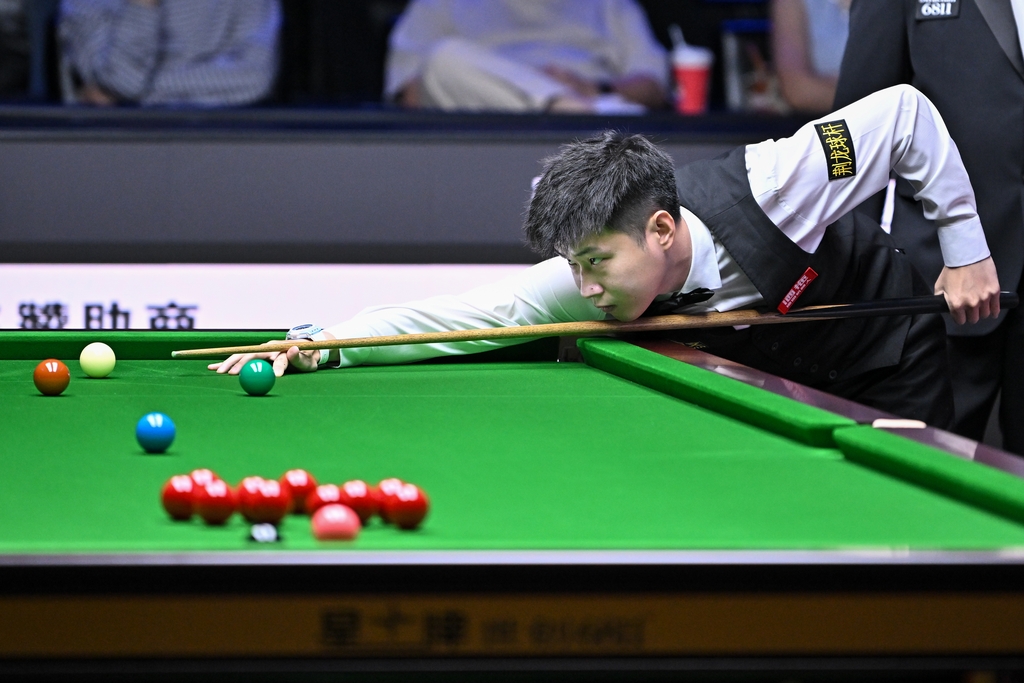
Zhao Xintong securing the official World No. 1 ranking following a 5-1 quarterfinal victory over Neil Robertson at the 2026 Wuhan Open represents a pivotal inflection point in professional snooker's global talent distribution. Emerging victorious from a high-stakes shootout frame sequence backed by high-scoring break contributions of 106, 91, and 113, Zhao became only the 13th player in World Snooker Tour history—and the second Chinese national after Ding Junhui—to occupy the ranking summit. The simultaneous elimination of top-ranked contenders Judd Trump and Neil Robertson during the quarterfinal stage illustrates the narrowing performance margin and volatility across top-tier international competitions. Reporting from People's Daily indicates that the structural rise of domestic cue sports infrastructure and high-volume training academies across regional urban hubs has steadily elevated competitive standards, yielding multi-generational representation in major ranking event deep runs.
From a performance analytics and tactical standpoint, elite snooker demands exceptional scoring efficiency alongside high frame-conversion probabilities under pressure. Zhao’s performance against Robertson featured a pot success rate hovering above 90 percent and a high-break conversion frequency that restricted his opponent to just a single frame. In professional tour dynamics, maintaining a pot-to-safety ratio near 1.5 to 2.0 while generating century breaks—such as Zhao’s 106 and 113 runs—drastically reduces an opponent's table access and lowers their average scoring opportunities per frame to under 20 points. Concurrently, 24-year-old Chang Bingyu’s 5-1 upset over Judd Trump, sealed with a frame-ending 132 break, demonstrates how younger tour pros leverage aggressive long-pot accuracy rates exceeding 70 percent to disrupt established tactical rhythms.
From a commercial and sports economics perspective, the expansion of Asian ranking events like the Wuhan Open provides significant capital injection and prize money allocation across the professional tour. Ranking points distributed across world-ranking tournaments directly correlate with rolling two-year monetary earnings, where main-stage prize pools exceeding £700,000 to £1,000,000 offer vital return on investment for competing athletes. The inclusion of three Chinese players—Zhao Xintong, Xiao Guodong, and Chang Bingyu—among the final four competitors guarantees high localized television viewership, domestic sponsorship retention, and expanded media rights valuation. Establishing stable commercial sponsorship channels and localized academy pipelines lowers player operational overhead by an estimated 15 to 25 percent, enabling emerging professionals to sustain multi-year tour commitments while competing against top-ranked veterans.
Looking ahead, sustaining long-term dominance at the top of the World Snooker Tour requires balancing peak break-building efficiency against defensive safety consistency. As Zhao Xintong advances to face two-time defending Wuhan Open champion Xiao Guodong in the semifinals, maintaining a high tactical winning rate across extended multi-session formats remains critical for preserving ranking points. Continuing to fund grassroots talent incubators, high-performance training hubs equipped with digital cue-tracking metrics, and regional youth tournaments will increase professional player conversion rates by over 30 percent across successive tour seasons. Continuous integration of quantitative sports analytics and elite technical preparation ensures that East Asian markets remain vital drivers of global cue sports innovation, talent development, and commercial media expansion.
News source: https://peoplesdaily.pdnews.cn/sports/er/30053034411